About SD Carry

As a young boy in Texas, I grew up with guns. They were basic tools, much like my grandfather's mitre box or pipe wrench, there to perform specific tasks when called upon. I was taught gun safety by virtually every male adult in my family. I spent eight years in the US Navy operating and maintaing various guns from .30 caliber to 5" rifles.

After a few years as a moderator on a popular gun forum, I learned that there is much disinformation, prejudice and plain ignorance about guns posted constantly on the internet.

This blog is dedicated to sharing worthwhile information about the increasing acceptance and practice of legal concealed carry in our country. There is much mis-information and wild opinion about this topic among its practitioners and the public in general. The moral, social and legal responsibilities of concealed carry are immense and must be understood and practiced by all who legally carry a gun.

There is also a vast amount of practical and useful information about carrying and the weapons themselves and I hope to be able to share some of that here. Your comments are welcome, but will be moderated by me before appearing on this blog.

Stay safe.

Other Pages

Showing posts with label IWB. Show all posts

Monday, July 14, 2014

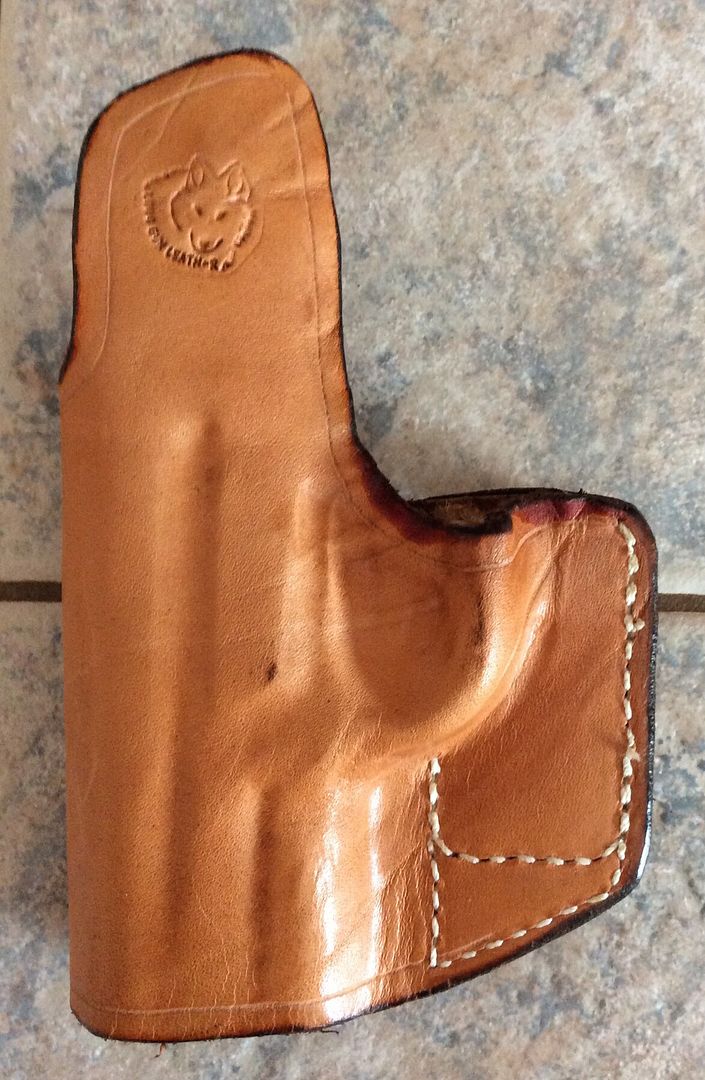
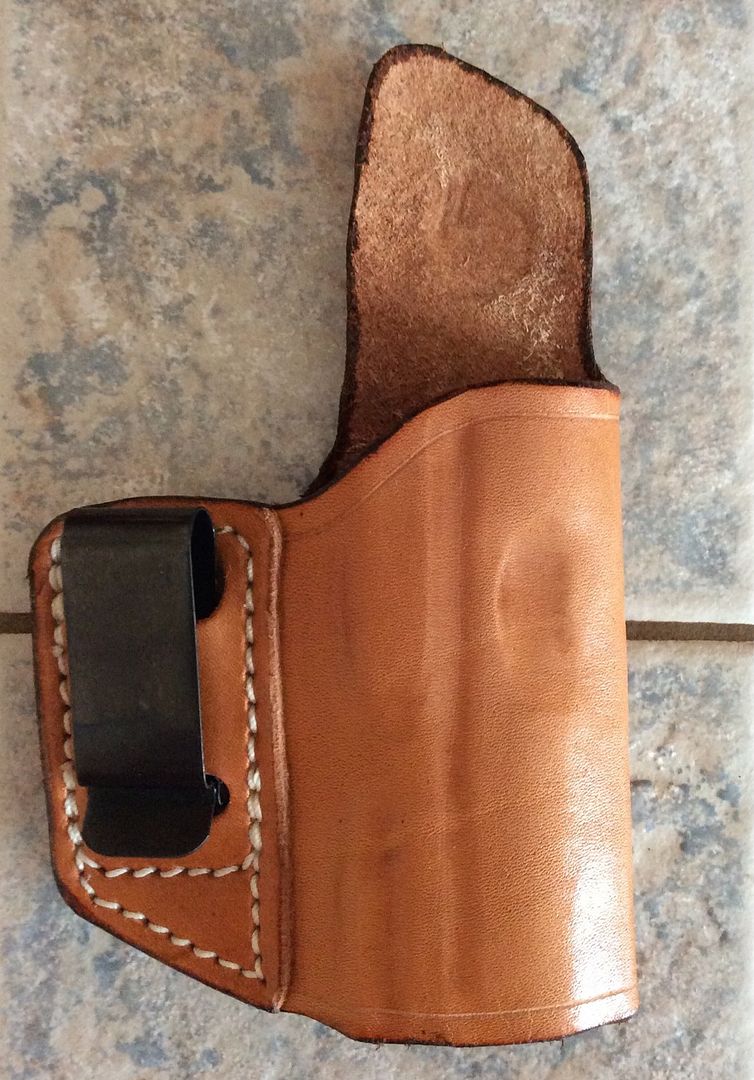
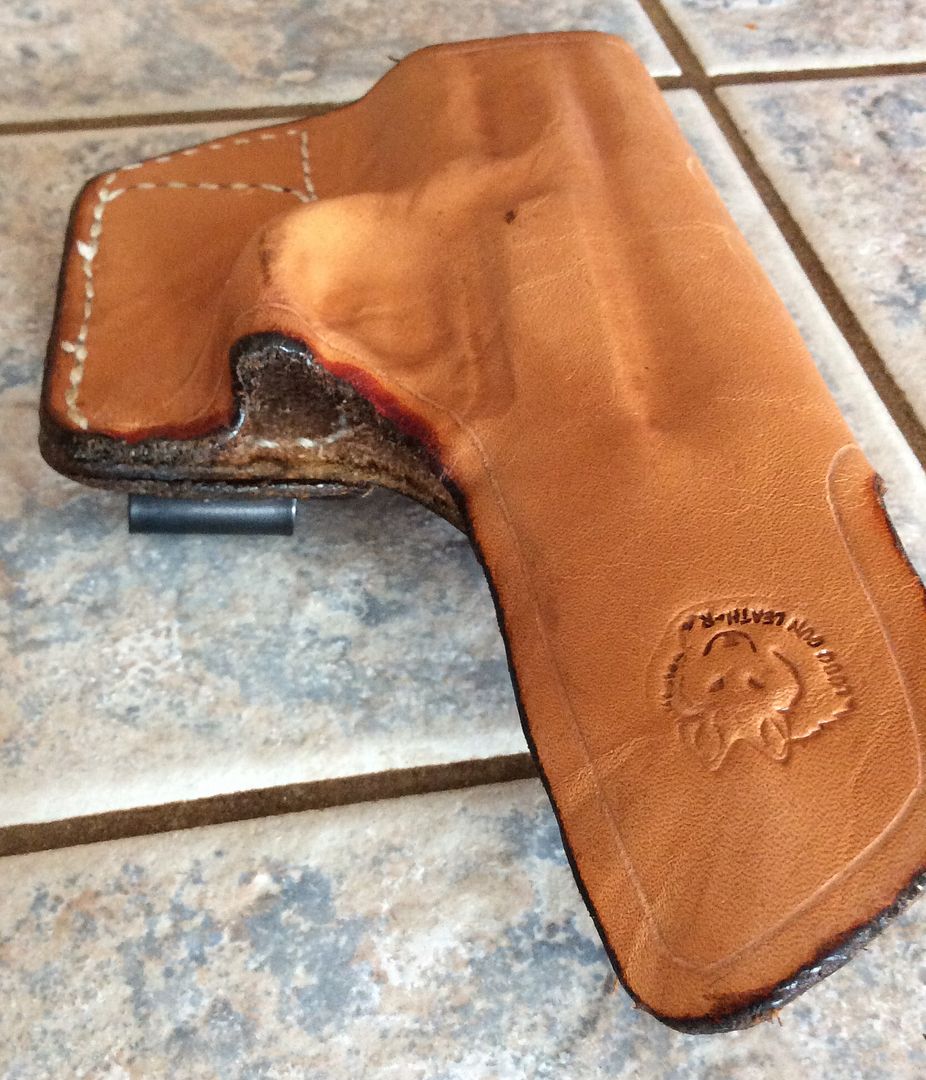
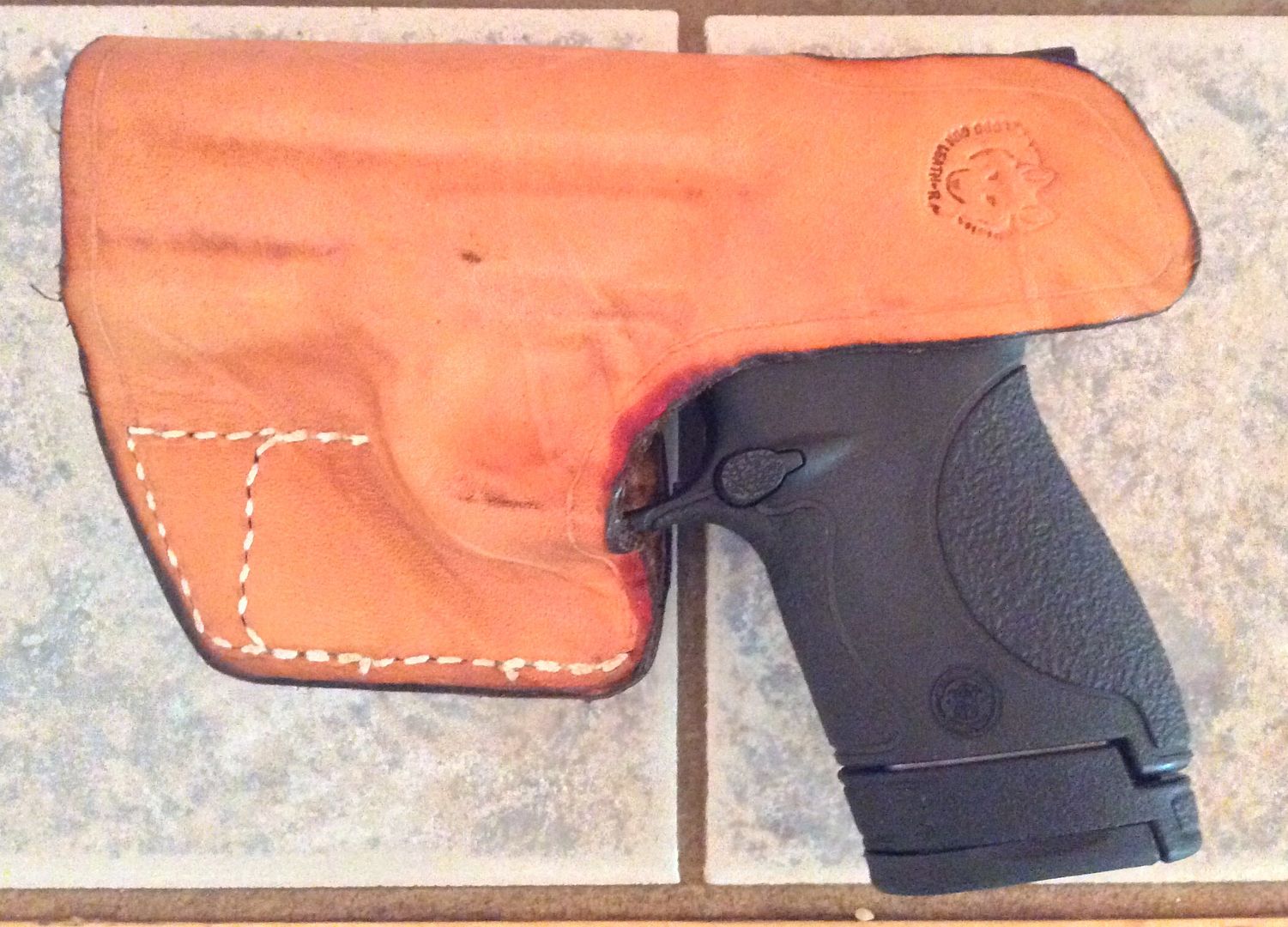
Lobo Gun Leather Offset Belt Clip IWB Holster

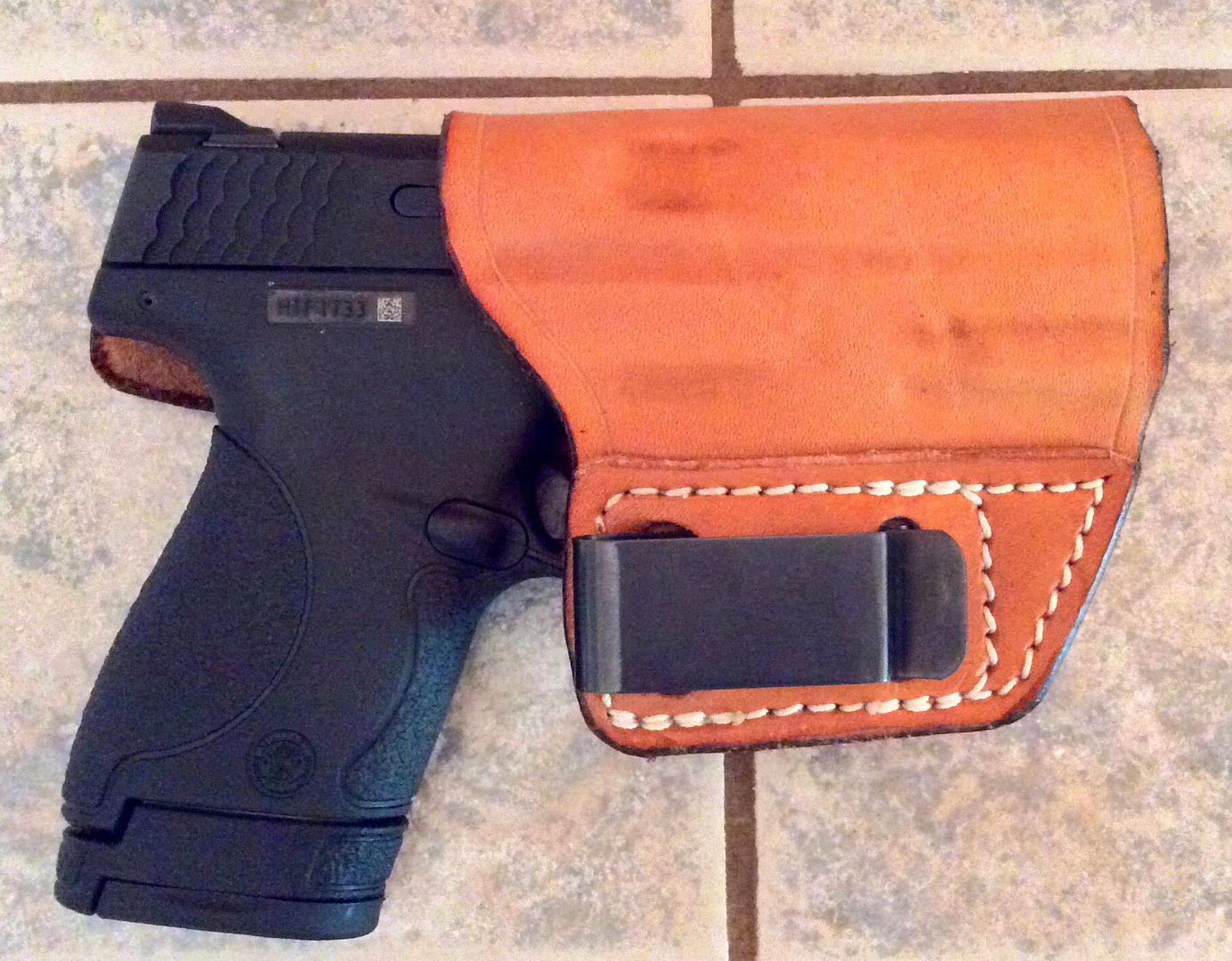
Lobo Gun Leather IWB Offset Holster


A few months ago I received a new Offset Belt Clip IWB Holster for my Ruger SR9c from Ray Cory. I posted an introduction to Ray and his advice from many years of law enforcement experience here: http://sdcarry.blogspot.com/search/label/Lobo%20Gun%20Leather

I have had the opportunity to use his  offset IWB holster for two different, albeit, similar guns. Ray made this holster for my SR9c and it performed as advertised for that task – securely and comfortably with a high enough ride to ensure the grip on the pistol was available for a fast and secure draw. Ray uses rather thin and flexible leather for this holster, cowhide in this case, not horsehide which I understand is stiffer than cowhide for the same thickness. While adequate for the Ruger, I personally would not have wanted to go with thinner leather, but I did enjoy the resulting comfort of the holster.

I no longer have the Ruger SR9c.  The Smith & Wesson M&P Shield is now my main carry gun. Curious about how this holster might work with it, I tried the Shield in Ray's holster designed for the Ruger and found it is almost a perfect fit. There may be a fraction of an inch extra on the slide shield, but if you didn't know the holster wasn't made for the Shield, you would never guess. The positive thing for me is that with the Shield's lighter weight, the holster feels just right. Not to stiff, not too flexible. The comfort is still there as is the excellent positioning of the grips above the belt line. And, the offset clip, riding behind the bulk of the pistol in the holster, keeps the profile slim and makes it even for concealable.


Sometimes too much is made of a holster's ability, or lack of it, to enable easy one-handed re-holstering of a firearm. There are times and activities in which this is a good thing to have in a holster, for example during practice sessions or at the range, but for a self defense carry gun and holster, I don't think it is a necessary feature. When I carry in public, the gun stays in the holster, and will do so unless the time comes for me to produce it. I doubt if I will be required to re-holster later without the aid of my other hand or eyes. Your opinion may differ.

So, for a good, well made and comfortable holster at a reasonable price, take a close look at Ray's work on his site: http://www.lobogunleather.com/1_home


Wednesday, August 21, 2013

Carry Holster Torture Report

Well, not 'torture' exactly, but significant. I want to report on my experience over the last five days in which I was traveling, working a convention with thousands of people, living in a hotel, up, down, walking around, unloading boxes, going out to dinner with groups of people, etc. All of those things you normally do in a normal month of life, but amplified and crammed into five days.

As my usual mode is to carry whenever legally permitted, I knew I would be packing for all of the time except crashing out in my hotel room, so I needed a good holster that was secure, comfortable and unobtrusive. I took three for the LC9 - a Bullard Belt Slide leather OWB, a pjholster IWB and a basic, plain-Jane Remora.

The short version is that except for one day, when I wore the Bullard with a loose, tropical short-sleeve shirt all day, I ended up with the Remora. The pjholster didn't work for me because I tend to carry appendix style IWB and all of the bending, stooping, carrying, sitting for ten and twelve hours is not comfortable with a kydex holster. At least for me. I do like pjholsters if I'm going with kydex, which I often do around the town, but for this intensive, active period, I found the kydex too uncomfortable.

It's an SR9c in the Remora, but the LC9 is basically the same. (I'll post a photo of the LC9 and the Remora when I get the chance later today.)


The Remora did shift, but really not to any large extent. I never had to re-adjust it or worry about it coming out or being loose.

So, what the week's torture test told me was that the basic Remora worked as advertised and became my almost constant companion. If I had taken a model with a sweat shield, it would have been almost perfect.

Wednesday, July 10, 2013

Remora Micro Clip holster and a laser equipped LCP

I have one of Remora's new Micro Clip holsters. I wanted to test it for fit with a laser sight, and for retention. My personal experience with small Remora holsters is that they don't stay where I put them throughout the day. I tend to carry my LCP in the appendix position. I used to carry cross draw, but I feel the appendix IWB position is more secure, more concealable and faster to access than cross draw. So, wearing the LCP constantly while doing all the things one does during the day which involves a lot of bending and twisting of the trunk, my experience is that a small Remora will move around and needs constant adjustment. I suppose if I really cinched up my Bear Creek gun belt, that might help, but I like comfort so that's not going to happen.

Micro Clip end view

The button protects the snap for the clip on the other side.

The clip unsnapped from the other side.

A size comparison.


The clip can be easily put on either side because of the built in snaps. This has a down side though. The clip swivels. Easily. Put the holster on, clip it to your belt and it can still move back and forth. Of course it won't come out, or off the belt, but it still can and does swivel a bit.

I think this is a good first effort on Remora's part to solve the issue of small holsters not being as secure in place as the larger ones. I carry a Ruger SR9c with a big magazine in Remoras, AIWB (Appendix In Waist Band) with little concern that the gun/holster will move around. It may, slightly, but usually not.

There may be no easy solution to the small holster issue since there is so little contact area to provide enough friction to keep it in place all day.

Thursday, November 29, 2012

Versacarry Mag Release Issue - Update

As you will see a few posts back, I had an issue with the magazine in my Ruger SR9c being unintentionally ejected when I bent over sharply while carrying in the Versacarry "medium" rise holster.
I contacted the Versacarry folks about this, then set about trying to analyze what happened. As the photo will show, when I had the Versacarry and SR9c  in my normal cross draw position, while wearing my usual Wrangler jeans, the mag release button on the Ruger is positioned right underneath the sewn end of a belt loop and the heavy Bear Creek gun belt I normally wear. When I bent over sharply it put pressure on the mag release button sufficient to trip the mag release.

Mag release button exposed, but not in danger of being depressed. This is not my normal cross draw carry position but somewhat further back to illustrate the position of the various components: holster, belt loop, belt and button.

In the normal cross draw position, the mag release button is directly under the end of the belt loop and can also get pressure from the top of the stiff gun belt. As you can see, the magazine (empty) has been partially ejected. This was a result of bending sharply at the waist as if picking something off the floor.


Now, this is a situation that required a number of factors to come together simultaneously, something that is very unusual. My take on this is that when using any holster with which the magazine release button is exposed (i.e., not protected against actuation) check to ensure that there will be nothing pressing on the button while the gun is in the carry position you have chosen. If so, move the gun and holster, or use a different holster in that place. For the Versacarry line, the simplest solution would be to choose one of their holsters with a lower or higher ride which would move the mag release button to another place. I would, of course, test this with an unloaded gun just to make sure. In fact, if you use any holster that exposes the magazine release button, test it thoroughly to ensure that does not happen to you.

So, some after the fact testing and analysis shows that this issue was not simply the result of carrying my SR9c in a Versacarry holster, but carrying a semi-automatic handgun in any holster in which the magazine release is exposed. Take a look at your normal carry with this in mind.

Be safe.

Saturday, November 17, 2012

IWB Thoughts

There have been many opinions voiced and gallons of ink, virtual and real, consumed over the "best" self- defense carry gun. I have avoided most of this and settled on what you might call a "middle of the road" gun - a large capacity 9 mm semi - auto that fits my ergonomic preferences. At this point I consider the most important aspect of self defense carry to be carry. I subscribe to the notion that the most effective self defense gun is the one you have when you need one.

That requires you to constantly carry your chosen weapon. Simple idea, but often not easy to follow. Obviously, developing a personal system to comfortably and effectively carry a self defense gun is key to this. And, the holster is the crucial component. In addition to keeping the pistol oriented correctly, the trigger covered and held securely, but not too securely to inhibit a clean draw, the holster must be comfortable enough to carry regardless of when, where and how a person goes about his or her daily business.

Obviously, larger handguns are more difficult to holster well and carry for a long period. Another reason why the big caliber advocates have a fundamental problem when it comes to actually carrying the big guns for self defense. But, even so, there are many, many holster designs that attempt to answer those requirements. That is why many of us have accumulated our box-o-holsters.

In terms of basic comfort, the OWB (outside the waist band) is superior to the IWB (inside the waist band) design, but IWB designs generally are better for concealment. There are, of course, exceptions. Most of us will eventually settle on one of each as our favorite holsters.

For me, my best holsters share certain characteristics. Comfort, of course, but comfort alone is not enough. I don't want a holster so comfortable I "don't know it is there". I want to know it is there and where it is, but I don't want it to be a constant nag or pain. I have one IWB holster, an N82 Tactical, which is insanely comfortable (for a holster, let's stay real, we aren't talking about pillows here) but sometimes doesn't want to let go of my gun when I need to draw it. Not good. Fails a prime requirement - make the gun easily accessible all of the time, without fail.

Stability. When I put a holster in place I expect it to stay there. So far, every holster I have tried, IWB or OWB styles, that has only one clip does not stay in place. Not that it migrates from one side to the other, but it moves too much. The grip rotates down to the belt line. Or up so the end pokes into my shirt, printing "gun here!". Not good. I don't like getting out of the car and having to readjust the position of my holster. So, two clips or belt loops are mandatory.

The hybrid holsters built with two clips and a synthetic shell on a leather backing are stable, but I don't find them acceptably comfortable and they are hard to put on and remove. Besides, I don't like those clips with the "tails" that stick out. Just the ticket to catch on your shirt or sweater hem when pulling it up get to your gun.

So, loops - one big enough for stability, or maybe two loops - and reasonable comfort that does not impede access. And, a good place to accommodate an extra magazine would be good. So, I'm looking closely at the D.M. Bullard Texas Conceal Carry holster. Since I favor cross draw carry, this might be an excellent choice. A good belt loop attachment will keep the grips above the belt line and the flat, wider design incorporating a spare mag pouch, might make it stable and reasonably comfortable. If I am able, I will review this holster here and see how it stacks up against the other IWB holsters I have tried and reviewed.

Wednesday, October 24, 2012

Initial Impressions: Little Foxx Holster for the SR9c

Little Foxx Holster with the Ruger SR9c
Tuckable J clip

After learning about Foxx Holsters from a posting on The Ruger Pistols Forum, I contacted Raymond, the owner and brain trust behind the company and discussed reviewing one of the line. I like hybrid holsters and have used and tested a few. These appeared to be well made and not overly large, and more intriguing, is Raymond's policy of zero shipping charges and his unconditional warranty. You can also try it for fourteen days to see if it is the right one for you. All this for $39. Hard to beat!

We settled on the Little Foxx model since I am primarily interested in cross-draw carry. I received a new Little Foxx Holster on Monday.

http://www.foxxholsters.com

Prompt shipment. It arrived in a bubble padded heavy envelope and in perfect condition. This holster is obviously made by someone who takes pride in his work. It was solidly constructed, smooth edges on the kydex and the leather. Leather edges of the backing are smoothed and dyed as well.

All of the rivets holding the kydex to the holster are flush and undamaged. The SR9c fit is right on and the moulding is perfect right down to the sight channel. The big, heavy low-profile kydex clip is fastened to the bottom of the kydex shell with two Chicago screws providing solid lockup and good alignment. The bottom attachment allows the holster to be worn either with the shirt tucked or not. I like that. I also like it that the clip does not have a "tail", which I find may catch on overgarments with hems, like some sweaters or sweatshirts.

Little Foxx, back side - the one next to you.
The SR9c is held somewhat loosely in the holster when the gun and holster are not attached to the belt and inside the waistband. This, I believe, is a design feature. When properly worn, the tension of the belt (and you should always use a belt made specifically for carrying a gun in a holster to get the best benefits from your holster regardless of make) and the fact that the leather backing will give a bit to conform to your body shape, tightens the kydex around the gun enough to make very positive retention yet an easy and smooth draw.

The Foxx holster was comfortable from the first wearing, and has proven to remain so over the intervening days I've been using it, and it is my main carry holster in order to provide good feedback and data for this review. At this point, I am carrying in my usual cross-draw position. If you will look back in the archives here, you will see posts concerning cross-draw and why I believe it has gotten an uncritical hearing and a bad rap. See especially the article by Mr. Campbell I've referenced for an experienced LEO's opinion. So, because that's my preferred carry position, I'll be evaluating the holster against my other IWB cross-draw carry units.

The primary competition for the Foxx holster is the N82 Tactical Pro IWB.

I have taken some comparison photos to illustrate the differences between the two holsters.


N82 Tactical Pro and the Little Foxx


Little Foxx superimposed on the N82 Tactical Pro for a size comparison.


The Foxx is considerably smaller and lighter than the N82. The Foxx uses lightweight kydex for the shell while the N82 uses a moulded thicker plastic. The kydex has 'give', the moulded plastic does not. With belt and body pressure, the Foxx kydex shell conforms a bit to the gun shape and this helps to 'lock' the pistol into the holster against the leather. The N82 depends on a small part of the moulding of the plastic shell to engage the front of the trigger guard to hold and retain the gun in the holster. This works well, but in order to release the trigger guard from the protruding plastic part in the trigger guard, one has to grasp the butt and give a small inward twist to release the pistol before it can be drawn. This is not as onerous as it sounds, but it is one other motion required to draw that is not present in other designs, like the Fox.

At this point, comfort is a toss-up. The Foxx is light, somewhat flexible and no larger than it needs to be. The top part of the slide is covered by leather but the grips are not. Some might call this a combat grip, but I prefer to think of it as an open grip. Combat, like 'tactical', is a term better applied to law enforcement or the military than a civilian rig meant for concealed carry. I might have to draw my weapon in self defense, but I don't plan to be going into combat with it. For that, I'd rather have a rifle.
Even with the open grip design, which I prefer, the Foxx is comfortable.

The N82 uses a kind of neoprene sandwich, with soft leather against the body and leather against the gun. The neoprene inside provides a good level of 'softness', comfort is a better word, and prevents sweat from migrating through to the weapon. However, I suspect the leather backing on the Foxx will provide an equally effective sweat barrier. No part of the gun touches your body with the N82. This does contribute to the outstanding comfort of the holster, but adds mass, area and closes the grip area to an extend. Combined with the need to twist then draw I find this is an inhibiting draw factor compared to the Foxx and similar 'open grip' holster designs. Bear in mind, however, that these factors are highly personal. What might be a negative for one person may have no effect, or be a positive attribute to another. I can only state my personal preferences.
Back sides of both holsters. The N82 showing the result of sweat marks from last summer.

So, it is early in the game but at this point I like what I see. And what I feel. The only negative issue relates to my cross-draw preference. I've come to find that most holster makers do not consider the effects of the cross draw position in their designs. And, I'm not speaking of strictly cross-draw designed holsters, but only for those that are designed to be worn IWB and can be positioned effectively in the cross-draw position. I've yet to examine other IWB holsters for this aspect other than the Foxx and a short while ago, the Versacarry. (See this blog: Versacarry Review and Field Notes post.)

In short, some holsters may position the Ruger SR9/40 series semiautomatic pistols such that, in the cross-draw orientation, the magazine release button is underneath the waistband material and the belt. If the belt is thick, as a good gun belt should be, and the wearer bends forward sharply, the pressure of the body pushing the gun and holster outward against the belt, can cause the magazine release button to be depressed enough to eject the magazine. This is definitely not good.
Note the top of the J clip, where the top of the belt will be, in the cross-draw carry, positions the belt over (covering) the magazine release button. This can, in certain circumstances when bending severely forward, press the button and release the magazine. However, the J clip is adjustable to prevent this.

If carrying the SR9 series in the cross-draw orientation, radical negative cants, such as pictured above, should be avoided to eliminate the magazine release issue possibility.
I have verified this issue with the Versacarry. With the Foxx holster, if the clip is positioned with too much negative cant (possible by using a left-hand carry clip on a right-hand cross draw orientation - see the photo above) this can happen as well. However, with the normal clip positioned in its most up-and-down (straight drop) orientation, the configuration of the clip, holster and gun is such that the magazine release button should never drop below the top of the belt line. So, there should be no concern about this if the proper clip is used and positioned right.
With the proper clip and orientation, the top of the belt should never rise above the magazine release button.

For most people, this is not a concern since only a small minority of us cranks insist on carrying cross-draw. (Good luck getting to your weapon in a hurry when you are belted into your seat or sitting down wearing a shirt, sweater and/or coat and your pistol is somewhere behind your hip.) Sorry, had to get that in... However, I do wish makers of good IWB holsters that can be worn cross-draw take into consideration protection of the magazine release where appropriate to do so.

I've only begun to evaluate the Foxx IWB for my SR9c. I will continue to give it a real-world field test and report back here on my findings. At this point, I am very pleased with the holster and anticipate it will become a regular in my small lineup of IWB holsters for this gun. And, I forgot to mention, the Foxx holster

Friday, October 19, 2012

FoxX Holsters - new evaluation

Next week I will be taking delivery of a new IWB holster from FoxX Holsters. I learned about this company from one of the members on the Ruger Pistols Forum. Upon visiting their web site I was impressed with the style, price and guarantees offered by the company. Try it for fourteen days, and if you don't want to keep it, send it back for a refund on the holster cost. Also, if it breaks or there are any other issues, they will fix or replace it for as long as you own it. Nice.

I still have not solved my IWB issues with my SR9c. A few of the holsters I now use are close to what I want in an IWB holster, but each has its shortcomings: the Remora is comfortable, flexible in terms of where one positions it and is easy on the draw, but it can shift and change position under certain circumstances. I expect a concealed carry holster to stay where I put it, regardless.

The N82 Tactical Pro I have is extremely comfortable even for all day and most of the night wear. It is tuckable, although this is not a feature I often use, but, it can shift a bit around the single clip, and I have not been able to torque the screw enough to keep the clip from rotating about its mounting point. Also, the Pro has a moulded plastic, not kydex, shell to hold the pistol in place. It "locks" in with a part of the plastic that holds the forward part of the trigger guard. To get the pistol to release from this "lock" requires you to grasp the pistol grip firmly and give an inward twist to the gun as you draw up and out. If I carry the SR9c with the manual safety in the "off" position (rendering the Ruger, in operation, to be much like a Glock) this is not an issue. However, if the safety needs to come off with the draw, the hand position necessary to grab, twist and release positions my thumb such that it is not in a good place to sweep the safety. Fumbling with a manual safety is not something I want in a stress situation.

I would like to try a D.M. Bullard IWB holster, but I haven't had the chance to use and evaluate one. As many of you know I have a number of Bullard's holsters and like them. However, this new Little FoxX holster may resolve my IWB issues.

One of the things I think I will like is the kydex positional "J" belt clip. There is no tail to interfere with a shirt or sweater when pulled up to clear the holster, and it can be positioned solidly with a cant or straight drop, important for me since I favor a cross draw holster position. Also, it appears to be no larger than it needs to be and possibly very comfortable.

Anyway, I will soon be able to put all this to the test and report back here.


Tuesday, January 31, 2012

Holster Boot Camp

I now suspect that when moving to concealed carry, after which gun would be best, the question of concealment is next in importance, namely, which sytle and make of holster will do the job. Unfortunately, there is no recourse but to try out a number of them in order to decide.

Everyone is different: different shape, size and preferences. By preferences, mean the kind of wardrobe one is accustomed to wearing and where is it least objectionable to carry a holstered handgun.

In general, semiautomatics are the best to conceal, given they are much thinner than revolvers. Even a model 1911 .45 is often easer to conceal, and wear, than a large frame revolver. So, sticking with semiautos as the point of discussion, and with male shooters, there are only a few places to carry concealed that are effective in concealment and access. They are:

1. IWB - Inside Of Waistband.
This is probably the most used type of carry. The gun is carried in a holster of varying designs that fit between the wearer's waistband and body. This arrangement covers the holster and gun that extends below the upper belt line so less will show should the outer garment ride up momentarily.

The holster is held in place by various means - metal or plastic clips that attach to the belt on the outside (or sometimes, inside) of the belt. The inside attachments really rely on gripping, or clipping to, the waistband and the clip is mainly there to keep the holster from being pulled out of the waist on the draw.

Some holsters of this type also depend on leather loops attached to the holster and through which the belt is threaded. They are also made to be "tuckable" if desired, by attaching the clip, or loop, at the bottom of the holster so that it will hinge outwardly enough to tuck a shirt tail between the hook or loop and the holster body, covering the gun and holster from view. This, of course, makes access more difficult, but not excessively so. One can yank the shirt up with the non-shooting hand while grasping the gun with the other.

Among this type of 'tuckable' IWB holsters are the so-called hybrids. They are typically composed of a wide and rather tall piece of leather cut to offer some protection to the body from the gun that sticks up out of a synthetic, usually kydex, holster that is moulded to the gun's shape for retention. The broad leather backing goes next to your body and is secured to you by metal clips, fore and aft, that clip to your belt. For almost any handgun, these are very comfortable although they can be a small hassle to put on and are not amenable to being moved to a different position without taking the entire rig off and repositioning it and re-clipping it to your belt. Most have different mounting holes for the metal clips so that the holster can be adjusted for ride height, and for cant - up to a point. Also, most designs now are 'tuckable' since the clips are held to the leather backing at their bottom ends, enabling the user to tuck his shirt over the holster and gun and below the clips. The only down side to this is the fact that your belt will bulge out over the holstered gun and you will have to yank your shirt out of the way before you can get to it.

Another more recent innovation is the "clipless" holster, pioneered by Remora. It is a synthetic holster, slick on the inside for easy draw, but made of a high friction material on the exterior which grips the waistband and inner garment, like the shirt, tenatiously. These are surprisingly effective, lightweight and inexpensive.

2. OWB - Outside Of Waistband.

These types are what most people think of when they think about holsters. They are worn primarily on the belt outside the waistband secured by a loop, slots or metal clip. They are the most comfortable and the least concealable without a coat or other covering garment. They are often equipped with a security device like a thumb break snap or other locking device that makes it easy for the person carrying to release it but difficult for anyone else to draw the gun. For all day comfort I prefer the OWB style.

Some holster makers are designing OWB holsters to be more concealable. D. M. Bullard, working out of his shop in Azle, Texas has a new design called. BTB (Between The Belt) which is very compact and holds the gun snug to the body. This, and keeping the bottom of the holster close to the bottom of the belt will make a very concealable OWB holster for wearing under a light shirt or T-shirt. The biggest advantage I can see with this style is its rounded bottom, which, if exposed below a garment, does not look like a holster.

There is a new design called the "3-Speed" holster, made of softer materials and held about the waist with a soft, integral belt, secured with velcro. This is demonstrated to be worn at the 12 o'clock position and can be pulled down deep into one's pants so that the gun does not show at all. One would have to wear pants loose enough to get a hand under the belt and waistband deep enough to grab the pistol and yank it out. It can also be made to ride higher so that the grips are above the belt line, but still at the 12 o'clock position. I would think that this might be acceptable for a small gun, like a Ruger LCP, but something larger would require a big gun and holster to be stuck right down the middle of your pants behind your fly. I think this might prove to be uncomfortable both when sitting and when having to heed nature's call. But it might work for some. I will watch for reviews of this product.

3. Pocket
A good pocket holster, for either front or back pockets, is a fine way to carry a small gun like a Ruger LCP either as a primary carry or back up gun. There are many fine holster makers who cater to this type of carry, so there are many quality designs and holsters to choose from. Most effective designs incorporate some kind of panel that lies between the gun and the front, or outside, of the pocket, to prevent the gun's outline from "printing" through the pocket. The panels are attached in such a way that one's hand is easily inserted between the panel and the grips of the gun to draw it from the holster, which stays in the pocket.

Obviously, the larger the gun, the larger the pocket needs to be to conceal it. This is a matter of diminishing returns. Some guns are o.k. for pocket carry and most are not.

4. Ankle
It's what it says it is. A holster for your gun strapped to your ankle. Suitable for a back up gun, should you lean that way, but difficult to get to. Certainly, some situations would favor this style of carry, but not many. If you are down, for whatever reason, it might be easier to grab your gun from an ankle hoster than, say, an IWB carry. But, maybe not. I've never fancied having a gun strapped to my ankle, so I can't report on this style from any personal experience.

5. Shoulder
The classic "detective" rig. A gun slung under the weak-side armpit, secured by an arrangement of straps and buckles and concealed by a loose shirt or coat. I would consider that this is a good choice for someone who sits a lot during the day and may need quick access to his or her firearm. There are many different rigs running from $40 or so for the synthetic materials rig, to well over $100 for leather.

I hope this helps those new to concealed carry and who are dealing with holsters. No matter what you end up with, you can count on having probably three or more holsters per gun. The only way to know which suits you and your lifestyle and wardrobe is to try some out, and the used holster market isn't all that great. If you know someone who is a licensed conceal carry holder and has a few extra holsters (and who doesn't) you could ask to borrow a few to try out. Otherwise think carefully about how yo think concealed carry would work best for you, given the gun or guns you will be carrying, and get the best holster(s) you can. Buy one good holster be done, or buy three or four bad ones and spend more.