|
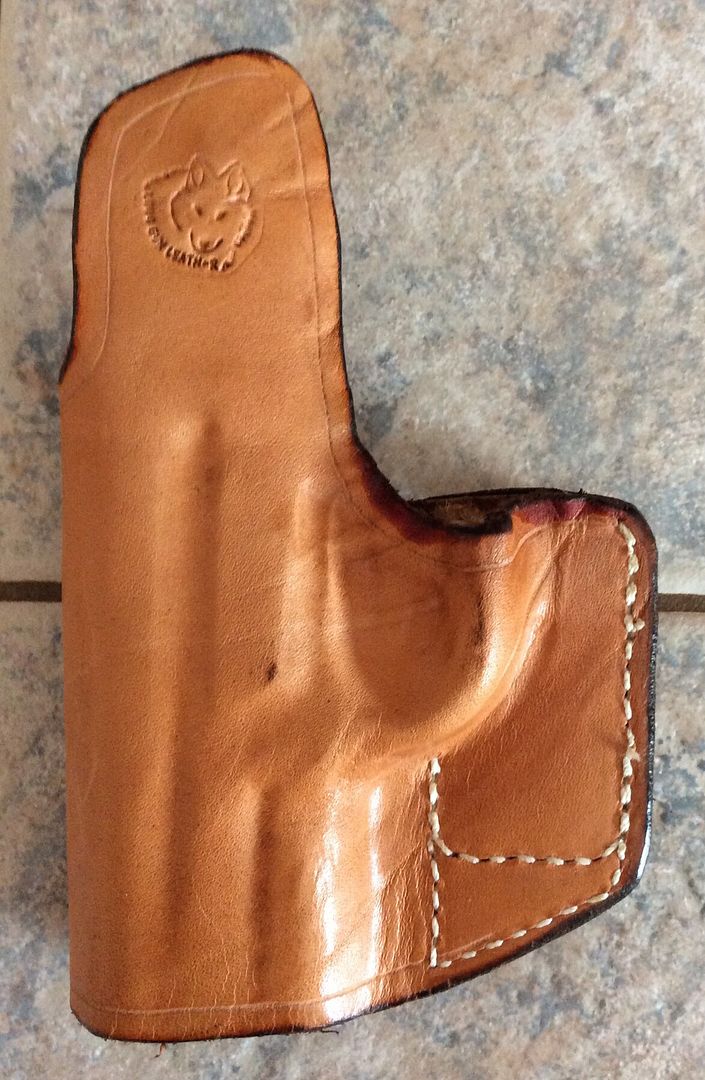
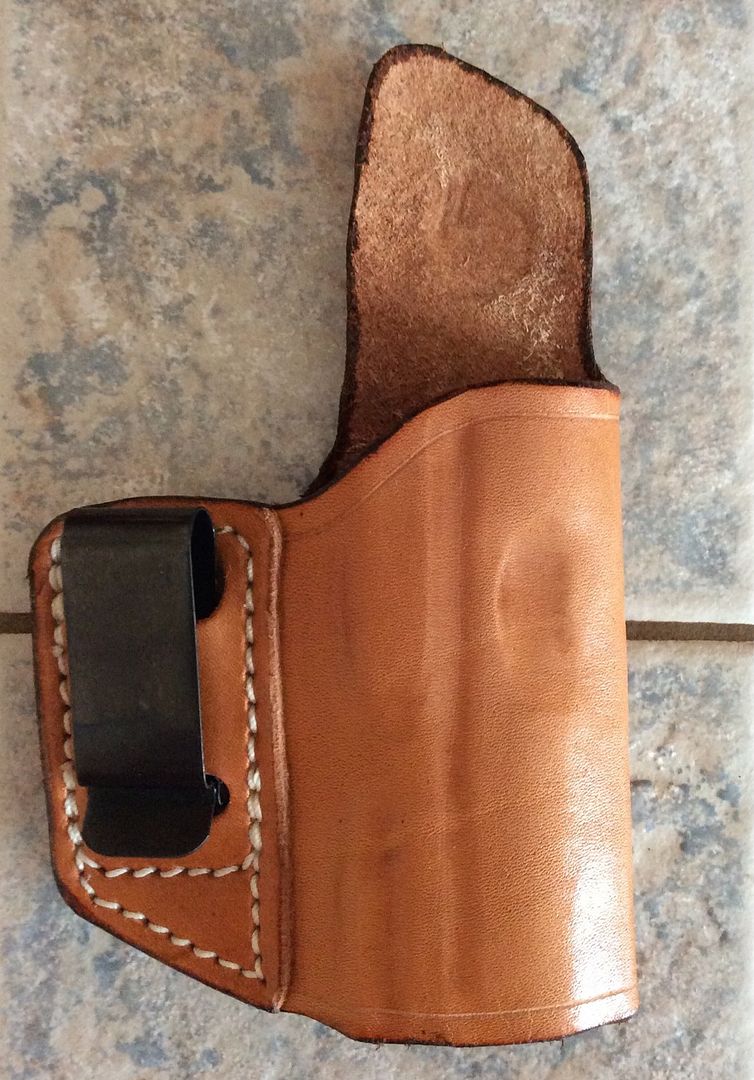
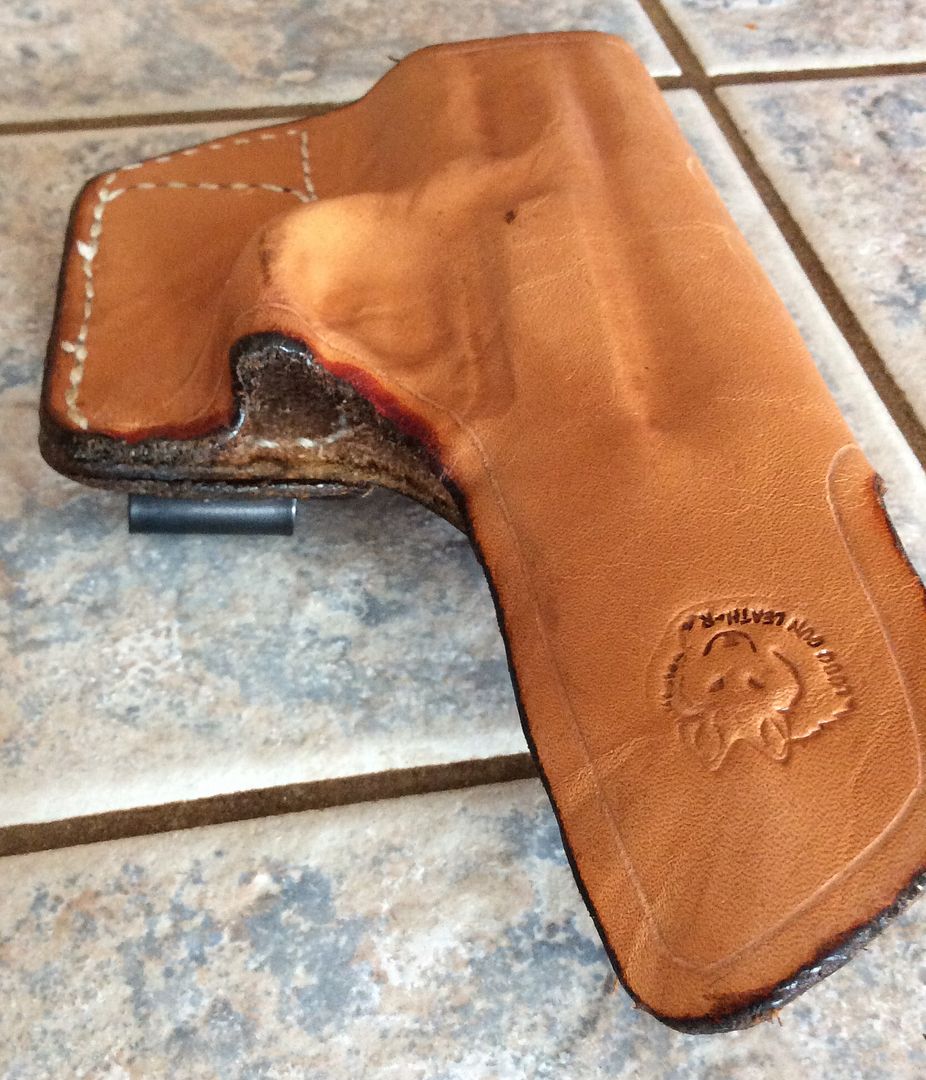
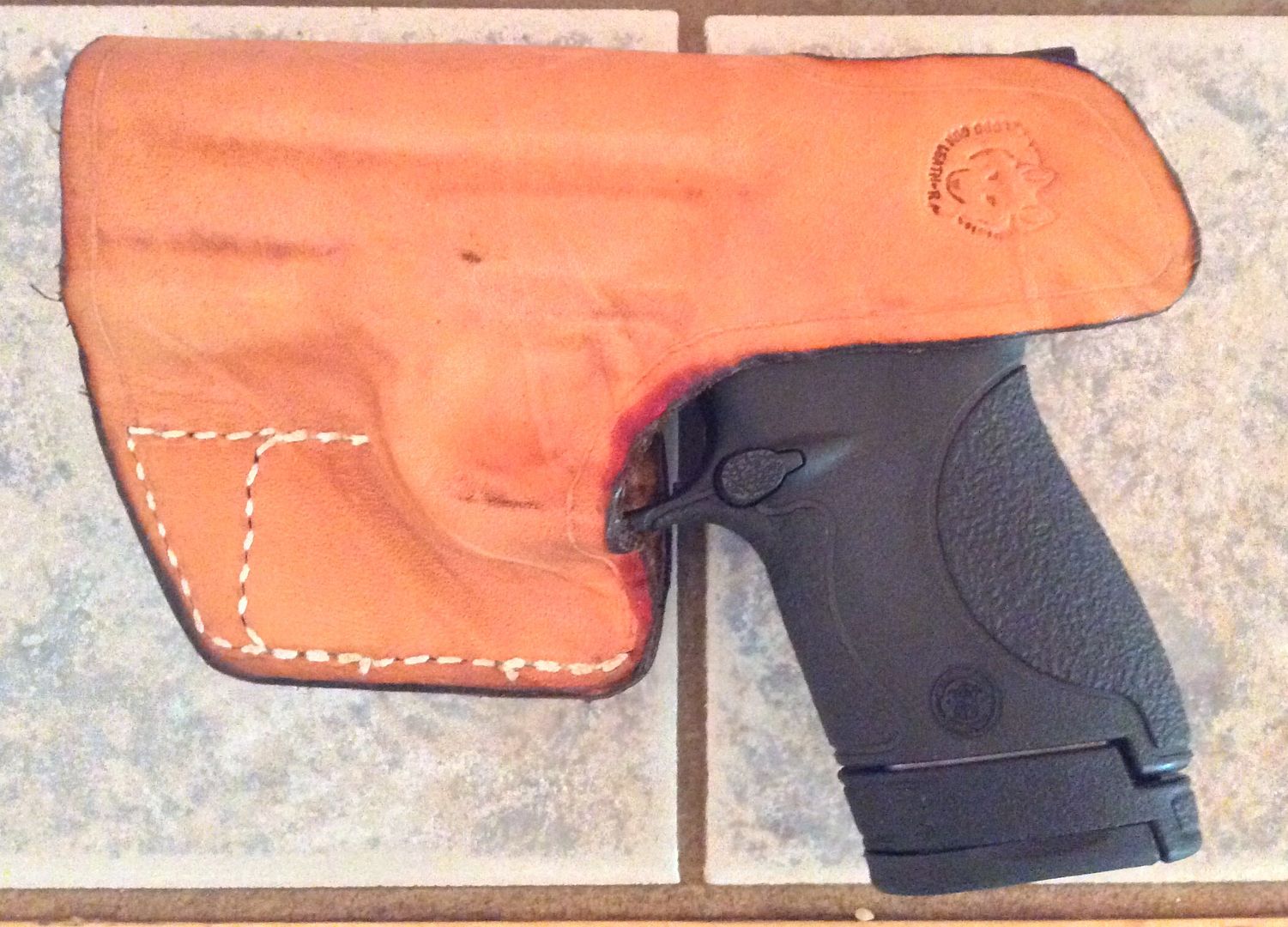
| Lobo Gun Leather offset IWB holster |
As anyone knows who has followed or read this blog postings over the last year or so, I have tried out and reported on many holsters for self defense carry. I have, as many of us have, the proverbial "box of holsters" holding the rejects and not-so-good holsters. Even so, I am always on the lookout for what I perceive to be a better holster. Last week, reading a post on my forum from a member who had received a new holster from an outfit called Lobo Gun Leather, (http://www.lobogunleather.com) owned and operated by Ray Cory. I cruised on over to the site to take a look.
Right away I saw that the quality of these holsters were very good and the prices were, in turn, very reasonable. And, the main motto on the home page made no bones about what these holsters are all about. "Lobo gun leather. Serious equipment for serious business."
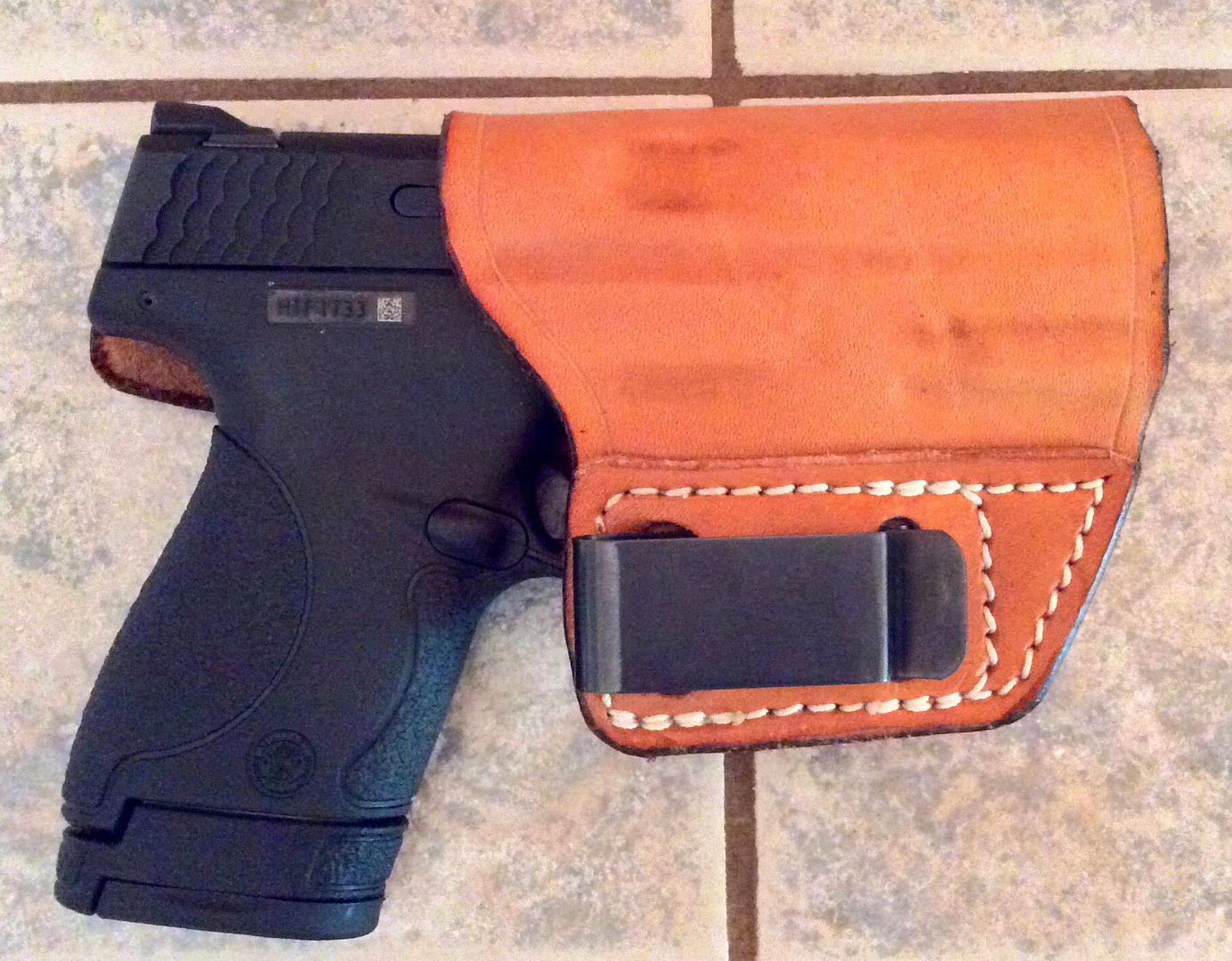
One in particular caught my interest. Ray made an interesting holster for my kind of concealed carry: AIWB or cross draw. It's moulded leather, well made and designed with an offset single clip. This reduces the width of the holster, making it easier to conceal, and instead of the usual mass market spring clip, Ray spent time and money to acquire a better clip for this design.
Being in the initial stages of putting together a series of articles here on the different holster designs for AIWB and cross draw carry – leather, synthetic, kydex, hybrid – I inquired of Ray if he would be interested in including the offset clip design in my testing and review. Later that day, I received a reply from Ray along with his informative 'dissertation' on holster design. I have copied and pasted the relevant part at the end of this post. It is the most informative and intelligent explanation of holster design and use that I have read. I had earlier, independently arrived at the four basic factors of holster design explained by Ray, below. However, I have not been able to so clearly articulate those facts as Ray has done. With his permission, I am posting Ray's dissertation on holster design below. Read it and learn. I certainly did.
"Everything in holster design involves compromises among the 4 basic factors of comfort, accessibility, security, and concealability. Whenever one factor is emphasized there will be compromises in the other factors. There is no such thing as the "perfect holster" for every user or situation. Only the user can decide which factors are most important for his needs and how much he is willing to compromise in the other factors.
If you do nothing but repeat that little paragraph you will be doing your readers a great service. Every day I am contacted by at least one new graduate of the "Holster Genius School" who has an idea for the "perfect holster", looking for someone to turn his idea into reality. You name it, I've been asked for it. Convertible IWB-OWB holsters with variable cants and ride heights, strong-side/cross-draw combinations, combination holster-magazine pouch-handcuff case (still waiting for someone to ask for a way to carry his MP3 player or smartphone as well).
It seems like just about everyone has read two gun magazines and a couple of blogs, and is now an expert demanding every feature imaginable in a holster. Their public range forbids holsters without covered trigger guards (basically an insurance requirement) so they "know" that this is cast in stone. The instructor at their last training class demanded holsters that permit one-handed reholstering (important for law enforcement applications where escalation and deescalation of force issues are serious matters, but the typical civilian in a self-defense situation might best treat reholstering as the last possible consideration) so they are convinced that this must be holy writ. One easy example that I deal with all the time:
IWB-style holsters are designed to emphasize concealability by keeping the bulk of the holstered handgun inside the trousers. The compromises or trade-offs for this are typically in reduced accessibility and reduced comfort (for many people). My approach to IWB-style holsters is to keep bulk to a minimum (to maximize comfort and concealment) and to keep holster cant and ride height within certain parameters (allowing full access to the grip frame so that a proper grip can be obtained during the draw, rather than having to shift the pistol in the hand before a target may be engaged). But what do people seem to want or expect? (1) Holster mouth reinforcement to facilitate ease of reholstering (cannot possibly be done without significantly increasing bulk, compromising comfort and concealability). (2) Ride heights and/or holster cants (carry angles) that place the grip-frame so close to the waistband and belt that it is impossible to get a solid grip on the pistol during the draw. (3) IWB-style holsters with thumb-break retention (which can be difficult, if not impossible, to release due to proximity to and pressures applied from the body, waistband, belt, and other clothing).
I regularly respond to inquiries about these things several times every week. When someone expresses a requirement for easy one-hand reholstering in an IWB-style holster I always recommend that they consider any type of holster other than IWB. When someone wants a ride height or cant that seriously compromises accessibility I always recommend against that. When someone requests thumb-break retention on the IWB-style holster I always tell them that I do not offer or recommend that.
I could sell many, many holsters by simply giving some people what they think that they want, so it may appear that I am talking myself out of a good deal of business. But I've been in this business long enough to know that the customer will never realize that his new holster didn't work out as expected PRECISELY BECAUSE of his bad ideas, but he will always remember that the holster maker failed to make his fantasy a reality.
The idea behind the Offset Belt Clip IWB Model was to reduce the overall bulk of the "package" (holstered handgun) by placing the belt clip away from the thickest parts of the handgun (revolver cylinder or pistol slide). This significantly reduces both "printing" and the tendencies of the clip to snag on clothing, upholstery, etc. Development of the idea quickly identified the need for a clip that was stronger than most then available through suppliers as well as properly sized to grip the belt securely while also allowing for the fabric of the trouser waistband.
I contacted a manufacturer who agreed to produce clips to my specifications (size, shape, material, etc) and accepted a deposit on the job. The promised delivery date passed without response so I contacted the manufacturer and was given a new production date. That date passed, and the manufacturer stopped responding to e-mails and telephone calls. Never saw a clip, never received a refund.
The project went on hold for the better part of a year, then I found another manufacturer who actually produced the first batch of clips for me. Prototype holsters were produced and tested (I use several experienced people to test new designs for me, allowing me to get a broad sample of comments and criticisms), then the new design went onto the market. The result has been that the Offset Belt Clip IWB Model is now my second most popular design (after the Enhanced Pancake Model), now in its 4th year of production. That point was reached only after a year and a half of development and the investment of more than a few dollars before the first holster could be sold.
The Offset Belt Clip Model does not come without compromises (remember my little lecture above). The mounting position of the belt clip limits applications to neutral cant (vertical carry position). Offsetting the belt clip places the balance point of the handgun's weight forward of the belt attachment point, and testing revealed that the larger and heavier handguns (particularly large-frame revolvers) are not fully stabilized by this holster design during any strenuous physical activities. Consequently, I have limited production of this model to the smaller and lighter-weight handguns. Finally, with the smaller and shorter semi-auto pistols there is some necessary limitation of accessibility to the grip-frame during the draw in order to keep enough of the handgun contained within the holster for reasonable retention qualities.
So, I have just given you the opening chapter in my "What It's Like to be a Holster Maker Today" treatise! I hope that I have not bored you completely. I do hope that you will make some productive use of the points I have attempted to communicate.
I offer 11 holster designs (two new designs nearing completion), with or without 4 common options, in 4 finish colors, left-hand and right-hand, for 143 different handguns. This results in well over 60,000 possible variations, allowing customers to "customize" a particular holster style to individual needs and preferences. I am currently filling about 2,000 orders per year for customers in all 50 states and 33 other countries so far. With experience as a soldier in combat and as a peace officer in uniform, plain clothes, and undercover assignments I think I know a little bit about what really works and what doesn't work. I hope you will forgive me for my tendency as an old man to ramble on a bit.
Best regards,
Ray Cory
Police Chief (retired)
formerly Sergeant, US Army Airborne Infantry, Vietnam 1969-71
Founder of Lobo Gun Leather, making serious equipment for serious business since 1972"